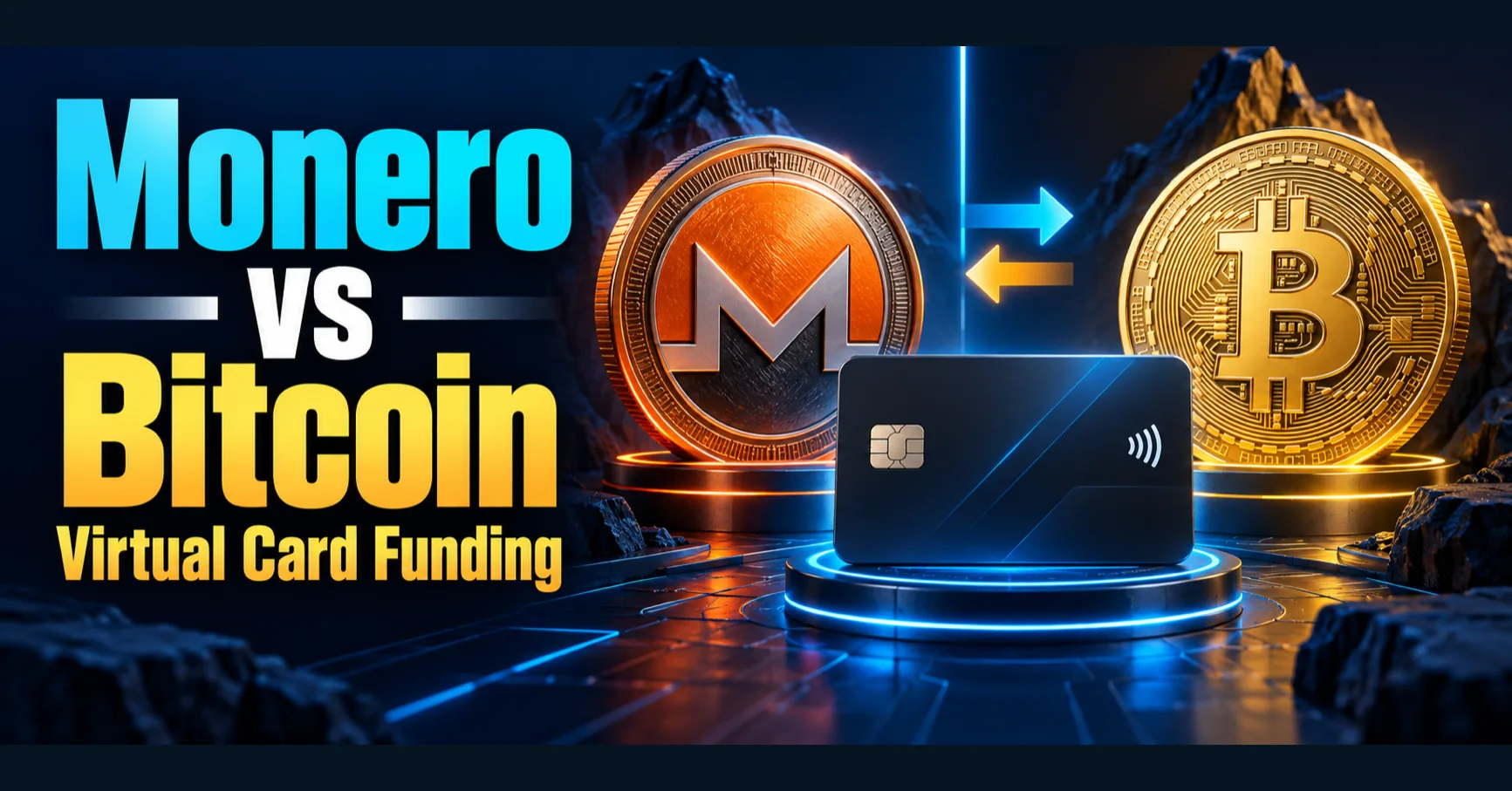
Choose Monero when on-chain privacy is your main funding priority; choose Bitcoin when wider recognition or your existing BTC balance makes the transaction simpler. After either deposit credits your balance, the merchant purchase follows the same card rail.
Monero vs Bitcoin for card funding
| Factor | Monero (XMR) | Bitcoin (BTC) |
|---|---|---|
| Public visibility | Designed to conceal sender, recipient and amount from public observers | Transactions and amounts appear on a public ledger; addresses are pseudonymous |
| VelshoCards route | Supported through Cryptomus | Supported through the crypto deposit flow |
| Network fee | Depends on transaction data and network conditions | Depends on transaction size and the fee market |
| Processor recognition | More specialized | Broadly recognized |
| Merchant payment | Normal card authorization after credit | Normal card authorization after credit |
| Best fit | Users prioritizing on-chain privacy | Users already holding BTC or prioritizing availability |
The privacy difference stops at the card boundary
Monero hides funding details from public blockchain observers in ways a transparent ledger does not. Bitcoin's ledger is public, and activity can sometimes be connected through analysis even when an address does not contain a legal name.
Cryptomus still processes the invoice, VelshoCards credits the wallet, the issuer authorizes the card and the merchant processes the order. Neither route makes those off-chain records disappear.
Which one costs less?
- Compare the network fee shown by each wallet.
- Compare the crypto amount required by each live Cryptomus invoice.
- Compare the wallet balance credited after confirmation.
- Add identical card issuance, funding and usage costs.
Prices, network load and quotes change. The useful measurement is final spendable card balance from equal starting values.
Which one is faster?
Both deposits need the confirmations required by the processor. Monero targets frequent blocks while Bitcoin's target interval is longer, but processor policy can matter more than timing alone. Follow the live invoice status instead of a fixed promise.
Which asset should you choose?
Choose XMR when
- You already hold unlocked XMR.
- You prefer Monero's privacy design.
- The live XMR quote is competitive.
- You understand the later card purchase creates separate records.
Choose BTC when
- You already hold BTC and want to avoid trading first.
- Your wallet offers a competitive current network fee.
- You prioritize widespread processor support.
- Public-ledger visibility is acceptable.
The steps after choosing are the same
- Create an invoice for XMR or BTC.
- Send only the selected asset to its invoice.
- Wait for confirmation and credit.
- Review card fees and limits.
- Issue, fund and use the card at an eligible merchant.
For XMR in detail, read How to Buy a Virtual Card With Monero. Compare card criteria in Best Virtual Cards for Monero.
Frequently asked questions
Is Monero or Bitcoin better for funding a virtual card?
Monero is stronger when on-chain privacy is the priority. Bitcoin has wider general recognition. Also compare the live quote, network fee and asset you already hold.
Does the merchant know which crypto funded the card?
The merchant normally receives a card authorization rather than the original crypto deposit. The platform and processor handle the funding connection.
Which coin has lower funding fees?
There is no permanent winner. Compare the wallet network fee, live Cryptomus quote and final credited balance at payment time.
Is an XMR-funded card more private?
The XMR funding transaction exposes less information on a public blockchain. Both routes create platform, issuer and merchant records after entering the card system.
Can I switch between XMR and BTC deposits?
Yes, by creating a new invoice for the supported asset you choose. Never send XMR to a BTC invoice or reuse instructions without verification.
Compare the live quotes
Open a VelshoCards account and compare current XMR and BTC invoices before funding a card.